Heat Protectant for Hair: When and How to Use It
5 min read Care know-how Updated 2 September 2026
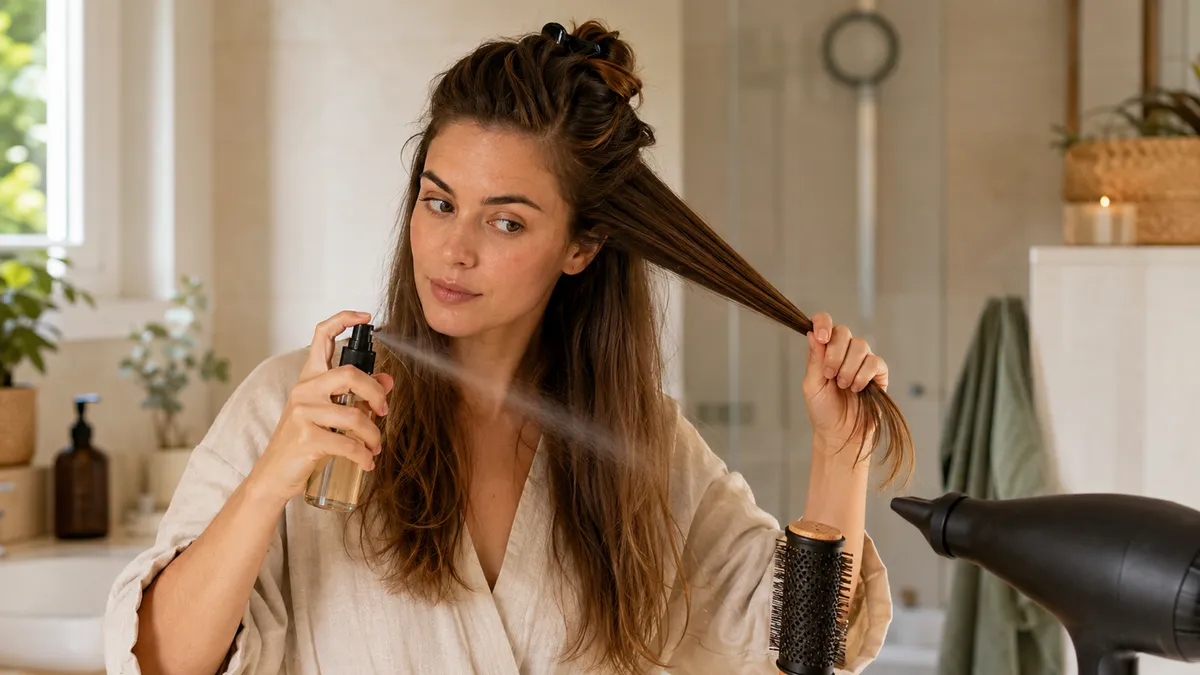
Heat protection is a product function, not a synonym for oil, serum or care cream. Before a blow-dryer, flat iron or curling wand you use only one product whose label covers exactly that application. This is precisely where most routines fall apart: something nourishing gets worked into the hair and everyone hopes it protects. A heat protectant noticeably reduces the damage, but only if the product matches the tool and you distribute it evenly.
What heat does to hair
When you style with hot tools, warmth acts directly on the outer cuticle of the fiber. If the heat is too high or comes too often, the hair loses moisture, the cuticle no longer lies flat, and the result is both visible and tangible: hair looks matte instead of glossy, feels rough and straw-like, frays at the ends and is harder to tame. Repeated heat also encourages split ends.
A heat protectant lays a thin film around the fiber that spreads the warmth more evenly and helps keep moisture inside the hair. It reduces the damage, it does not prevent it entirely. Anyone working on the highest setting every day strains the hair even with protection, just more slowly. So the best protection remains the heat that never reaches the hair in the first place: the lowest setting possible, the fewest passes possible. And blow-drying is heat styling too, not only the flat iron.
Choosing the right product by tool and hair type
The decisive point: a product only protects against heat if that is exactly what the packaging says. Not every cream and not every oil is made for it. In its Studio One™ styling line, MONAT offers several products designed for working with heat. Which one fits depends on the tool and the finish you want:
- Studio One™ Thermal Protect Shield: the all-rounder when it comes to targeted heat protection before styling. A spray distributes finely and evenly and works well if you use different tools.
- Studio One™ Blow-Dry Cream: a cream for anyone who mainly blow-dries and wants control and a smooth finish. Creams wrap the lengths a little more richly than a spray does.
- Smoothing Anti-Frizz™ Blow-Dry Spray: when smoothing and frizz control while blow-drying take priority and the hair tends to kink and curl.
By hair type, a rough guide: fine hair is weighed down faster by rich creams and often does better with a light spray. Strong, thick or dry hair tolerates and likes more substance, so here a cream can come into play. When in doubt, always check the label. It tells you whether a product protects against heat, which tool it is meant for and whether it goes on damp or dry hair. If heat protection is not stated outright, it is not a heat protectant.
How to distribute heat protection evenly
A heat protectant can only work where it lands. Applied unevenly, some strands stay unprotected, and those are exactly the ones that fray. Here is how to distribute it reliably:
Step 1 — Prepare. Start with well-squeezed, detangled hair. Check the packaging for whether your product goes on damp or dry hair.
Step 2 — Work in sections. Part the hair into sections and treat them one at a time. That way you reach the lower layers too, not just the top layer.
Step 3 — Spray from a distance. Hold a spray about a hand's width from the hair and mist strand by strand, especially through the lengths and ends. Sprayed too close, the product lands in spots instead of across the surface.
Step 4 — Comb it through. Distribute the protection with a wide-tooth comb from the lengths into the ends. This is the step that turns "on there somehow" into an even "on there everywhere".
Step 5 — Let it settle briefly, then style. Give the product a moment before the heat arrives. How often you can reapply depends on the label; not every product is meant for repeated application over the day.
Blow-dryer vs. flat iron and curling wand
The two styling paths make different demands:
- Blow-drying spreads warmth through an airflow and moves the hair. That is heat too, especially combined with a round brush, which builds up pull and warmth in spots. A light spray or a blow-dry cream fits here, and these often go on damp hair; blow-drying the right way has a big say in the result.
- Flat irons and curling wands deliver heat directly and concentrated to a single strand, often for longer and more pointedly than a dryer. The curling wand sometimes holds the strand in the heat the longest of all. For these tools you need protection whose label covers direct contact heat and usually dry hair.
One firm rule: never apply a flat iron or curling wand to wet hair. The water then flash-evaporates, the hair hisses, a clear sign the structure is being stressed. Rough-dry damp hair first before a hot tool comes into play. And pull each strand through only once or twice rather than going over it repeatedly.
Common mistakes
- Oil or care cream instead of heat protection before the flat iron: neither automatically protects against heat unless it is labeled for it.
- Spraying from too short a distance, so the product lands in spots instead of across the surface.
- Treating only the top layer and forgetting the lower sections.
- A hot tool on wet hair and the dreaded hiss.
- Styling too hot and too often: higher settings rarely save as much time as they cost in substance.
- Too much product: a thin, even layer protects better than a thick one that weighs hair down.
- Ignoring dry, brittle hair: well-cared-for, moisturized hair takes heat better than dried-out hair.
Quick questions
Can REJUVENIQE® replace heat protection?
No. REJUVENIQE® is a nourishing oil, not a designated heat protectant. It can be part of your care routine, but before a blow-dryer, flat iron or curling wand it does not replace a product that is explicitly labeled for heat protection.
Do I apply heat protection to wet or dry hair?
The packaging decides. Sprays and blow-dry products often go on towel-damp hair before drying; products for flat irons and curling wands are often applied to dry hair. Rely on the label, not on habit.
Do I need heat protection when blow-drying too?
Yes. The dryer also works with warmth, and with a round brush there is added spot heat and pull. A light spray or a blow-dry cream is usually enough here.
How do I distribute spray evenly?
Work in sections, mist strand by strand from about a hand's width away, then comb through the lengths and ends with a wide-tooth comb. That protects every fiber, not just the top layer.
Not sure which protection and which styling suit your hair? The hair check asks about blow-dryer, flat iron and curling wand separately and picks protection and styling to match your hair thickness and the finish you want. Take the free hair analysis. In a few minutes you get a clear assessment and concrete recommendations for your routine.