Product build-up on hair and scalp
7 min read Care know-how Updated 2 September 2026
Does your hair look dull, feel heavy and fall limp, even though you're doing everything right? Often there's no care mistake behind it, just build-up: an invisible layer of product residue, mineral deposits and styling leftovers that settles onto hair and scalp over days and weeks. The good news: build-up isn't damage, it's a deposit, and the right clarifying cleanse dissolves it again.
How to recognise build-up
Build-up usually creeps in quietly. Typical signs are dull, lacklustre hair that feels weighed down at the roots and turns stringy fast. The hair feels heavier, loses its bounce and falls flat, even freshly washed. A tell-tale signal: your usual care suddenly seems to have stopped working. Masques, oils and leave-ins barely absorb anymore and sit on the surface instead, because the film of residue simply won't let them through.
The scalp speaks up too. It can feel filmy, coated or slightly itchy, without being irritated or sore. Important: a coated, uncomfortable feeling is a care matter. Persistent itching, redness, flaking or open patches are not. Those belong in a doctor's hands and no cosmetic cleanse will fix them.
How deposits build up
Build-up rarely comes from a single cause; it's a combination. The classic culprit is film-forming ingredients from many different products, from styling creams, sprays, mousses and leave-ins, layering up when you don't clarify thoroughly in between. The more different products you combine, the more likely something accumulates.
A second major factor is hard water. Minerals dissolved in hard water deposit onto the hair, making it feel rough and look duller. And thirdly, the frequency of styling and dry shampoo plays a role. Dry shampoo doesn't cleanse, it binds sebum, and those very binders stay in the hair between washes. Top up daily without ever washing properly and it accumulates over time.
One point matters to me: build-up is not simply "the silicones' fault". Silicones are just one of many possible film formers, and water-soluble or volatile types barely deposit at all. It's worth looking at this in a nuanced way rather than making a single ingredient the enemy. If the topic interests you, the guide Silicones & Sulfates in Hair Care: What They Really Do puts it in perspective.
Four kinds of residue, and how to tell them apart
Not every coating is the same, and telling them apart helps you respond in the right way:
- Styling build-up from mousses, sprays, gels and leave-ins: film-forming substances that layer up bit by bit. Best dissolved with a clarifying wash.
- Oils and rich care: too much oil or too heavy a masque at the roots leaves a greasy, heavy feel. Here what helps first is less product at the roots and, if needed, a more thorough wash.
- Mineral deposits from hard water: dissolved minerals settle as a rough, dull layer on the hair. A clarifying cleanse eases the feel; it does nothing about the water hardness itself.
- Flakes: here a close look pays off. Dry flakes from dried-on product residue are a care matter. Persistent, itchy or reddened flaking is not. That belongs in a doctor's hands and no cleanse will fix it.
What this means at MONAT
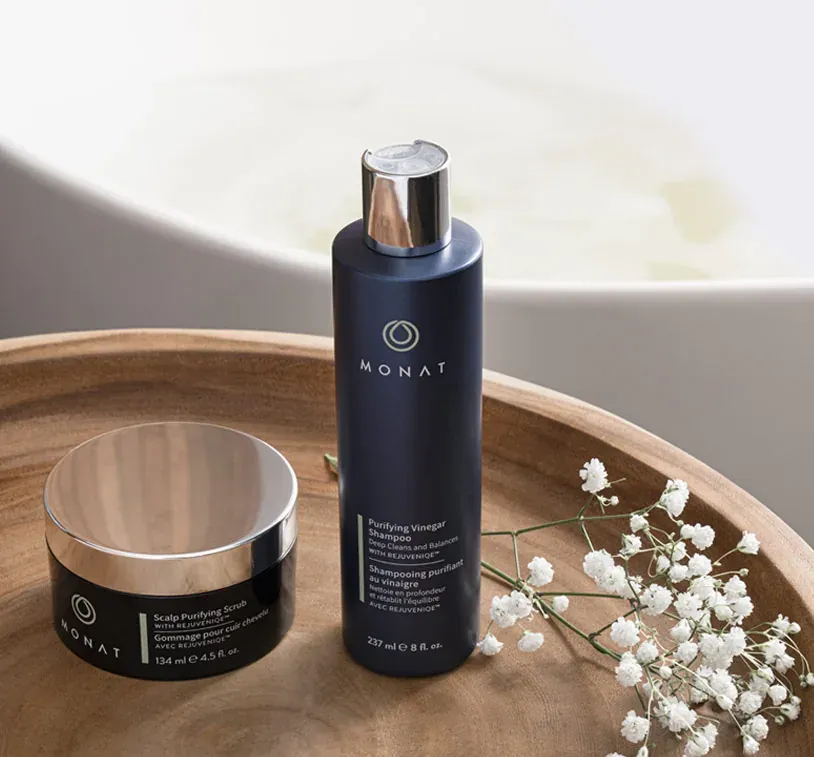
The MONAT method thinks about hair care from the scalp up, and clarifying is exactly where that starts. For a coated set of roots, MONAT's Purifying Vinegar line is the answer, with us the Purifying Vinegar Shampoo. It's a clarifying cleanse: it dissolves residue from styling products, dry shampoo and water deposits more thoroughly than a daily care wash does, so hair and roots feel lighter, cleaner and grippier again. That's a care and appearance goal, not a medical one, and the line is made for a healthy scalp.
One more word on "detox": the term sounds like clearing out toxins, but it's pure marketing language. Your scalp doesn't detox through a shampoo. A clarifying wash simply dissolves deposits from the surface. So don't let the word tempt you into expecting more than is actually behind it.
And one more thing to keep in mind: "nature-based" or "vinegar-based" doesn't automatically mean mild. A clarifying cleanse is deliberately more thorough, which is why it's not a daily shampoo but a targeted in-between wash. After clarifying, follow with a moisture-focused treatment on lengths and ends so the balance settles back in.
How often you should clarify
Less often than you might think. For most people a clarifying wash every one to two weeks is enough, depending on how much you style, how often you use dry shampoo and how hard your water is. If you use few products and have soft water, you'll need it less; style daily and you're at the upper end. Clarifying is an addition to your normal routine, not a replacement. For how it fits into washing, see the guide How to Wash Your Hair Properly.
Build-up or dryness? How to tell them apart
Both states feel similarly dull, but the fix is the opposite. With build-up, something sits on the hair: it feels weighed down, filmy, heavy, and care won't absorb. Clarifying helps here. With dryness, the hair is missing something: it feels straw-like, brittle and thirsty and drinks care right up. Here clarifying would make things worse, and what's needed is moisture. The rule of thumb: if your care suddenly seems useless and the hair feels heavy, think build-up. If it's rough and eager to absorb, think dryness.
How this step fits into a complete routine is in Building a Hair-Care Routine: The 3 Steps That Matter.
Quick questions
How do I know it's really build-up?
The hair feels heavy, dull and stringy, and your usual care seems to have stopped working, as if it no longer absorbs at all. A clarifying wash usually brings quick clarity here.
Is build-up just a silicone problem?
No. Silicones are only one of many possible film formers. Hard water, lots of different styling products and frequent dry shampoo all contribute just as much. Pinning it on a single ingredient falls short.
Can I use the vinegar shampoo every day?
No, it's a targeted in-between wash, not an everyday shampoo. For most people about every one to two weeks fits, followed by a moisture-focused treatment on the lengths.
Not sure whether your hair needs clarifying or moisture? Our free hair analysis asks a few targeted questions and gives you a first read in minutes, along with the care direction that fits, no obligation and at your own pace.