Scalp scrub: worth it or too much?
6 min read Care know-how Updated 2 September 2026
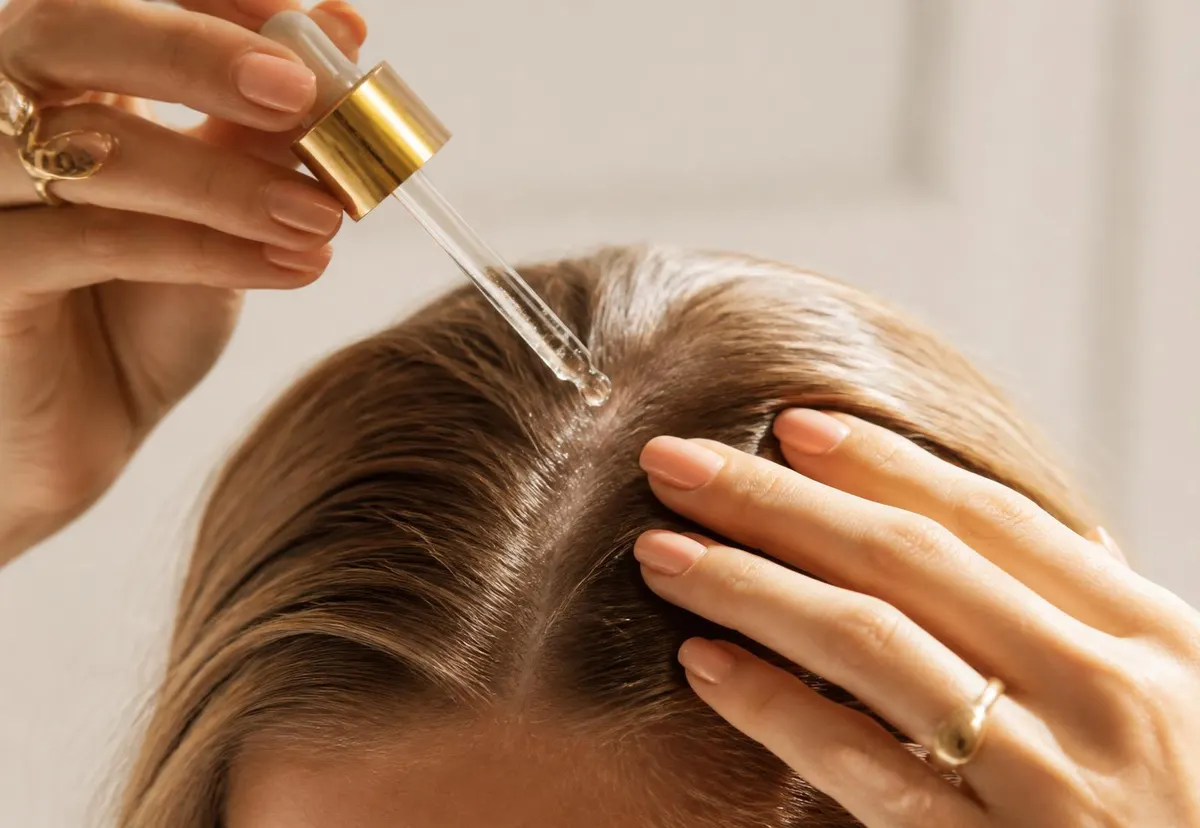
Scalp scrubs are everywhere right now, but does your scalp actually need one? The short answer: sometimes yes, but often no. A scrub can be a sensible occasional step when something is genuinely building up at the roots. It's not a daily must, though, and for some scalp situations it's exactly the wrong choice. First things first: a scalp scrub is a cosmetic care product for a healthy scalp. It's not a treatment for dandruff, eczema, psoriasis or an allergy.
When a scrub genuinely helps
A scrub works at the roots and mechanically lifts away what has settled on the surface. That's precisely why it makes real sense in three situations:
- Noticeable build-up. When your roots feel filmy, your hair looks dull and heavy, and your usual wash no longer clears it, the culprit can be residue from styling products, dry shampoo or hard water. A scrub lifts that layer on purpose.
- Dry flakes "from product". Fine, dry flakes that look more like dried-on product residue than a genuine scalp condition are easy to take along with an occasional scrub wash.
- A quickly oily scalp. If your roots feel stringy and weighed down again shortly after washing, an occasional clarifying step can help your hair feel cleaner and lighter.
In all of these cases it's about appearance and comfort, not a medical effect.
What this means at MONAT
The MONAT method thinks from the scalp up, and a scrub is a tool for one particular moment, not for every day. We reach for it only when the state of the roots calls for it. At MONAT, the Scalp Cleansing Scrub is designed as exactly that kind of targeted step: massaged in gently, rinsed out well, and then back to your normal care. If you prefer something even gentler, the Purifying Vinegar line is the milder routine option for occasional clarifying, without the mechanical grit of a scrub.
How often is enough?
The most common misconception is that more is better. The opposite is true. A scalp scrub is an occasional step, not a shampoo replacement, and certainly not something for every wash. Think of a targeted in-between wash when you actually feel the build-up, not on a fixed schedule. Scrubbing too often and too hard can quickly flip that fresh feeling into its opposite: roots that feel irritated rather than clean.
Where the scrub fits in your wash routine
The spot is clear-cut: on a dampened scalp, before shampoo. The sequence:
- Wet hair and scalp thoroughly.
- Massage the scrub gently into the roots in small circular motions with your fingertips, never with your nails, for about one to two minutes, without scrubbing.
- Rinse out completely.
- Then shampoo mildly as usual and care for the lengths.
For frequency there's a clear upper limit: at most once a week, and with a calm, unremarkable scalp rather every one to two weeks, and only when you notice tangible build-up. More is not better. Scrub more often and you risk exactly the irritation you set out to avoid.
When to leave it alone
Just as important as knowing "when yes" is knowing "when absolutely not". A scrub does not belong on a scalp that's currently unwell. Skip it, and reach for nothing clarifying or abrasive, when your scalp is:
- irritated, red, swollen or hot,
- showing inflamed, weeping or broken areas,
- crusted, sore or scratched open,
- reacting unusually strongly or unpredictably, with burning, tightness or redness even from mild products,
- or itching for a known reason, such as dandruff, eczema or psoriasis.
On irritated or broken skin, the mechanical friction of a scrub only makes things worse. Clarifying and exfoliating always require an intact, calm scalp. If you're unsure how to read what your scalp is telling you, the guide to a sensitive scalp can help you sort it out. It's no substitute for a medical assessment, though.
Red lines: this is not a job for a scrub
See a doctor, not a scrub. Get professional advice instead of reaching for a scrub if you notice any of these:
- pain on the scalp,
- redness that spreads or turns hot,
- weeping or crusting patches,
- persistent itch that stays or keeps coming back.
These are signals that belong in professional hands. No cosmetic product, a scrub included, diagnoses or treats a skin condition.
And one final point: if your real issue is stubborn residue, it pays to look at the cause first. The guide to product build-up on hair and scalp shows where build-up comes from and how to manage it for good. Often you then need no scrub at all.
How this step fits into a complete routine is in Building a Hair-Care Routine: The 3 Steps That Matter.
Quick questions
Does a scrub replace my shampoo?
No. It's an occasional in-between step, not a standard wash. Afterwards you go back to your usual gentle care.
How often should I scrub?
Only occasionally and as needed, when you notice real build-up, not at every wash and not on a fixed plan.
Is "nature-based" automatically gentle?
No. Natural or vinegar-based formulas can also be too much on sensitive skin. What matters is the state of your skin and a patch test, not the label.
What if it itches or burns after scrubbing?
Stop and observe. Burning or increasing itch is a stop signal. If it persists, it belongs in professional hands.
Scalp scrub before or after shampoo?
Before the shampoo, on a wet scalp. The scrub loosens build-up and the shampoo then rinses it away. Follow with conditioner through the lengths as usual.
What is the difference between a physical and a chemical exfoliant?
A physical exfoliant works with fine particles that lift residue away while you massage. A chemical one works with acids that loosen bonds and needs no friction at all. For a sensitive scalp the second kind is often more comfortable, because no pressure is involved.
Exfoliating with dandruff, yes or no?
Carefully. Loose flakes on a calm scalp usually tolerate a mild exfoliant well. On inflamed, reddened or persistently flaking skin it is the wrong moment: soothing comes first, and persistent symptoms belong with a dermatologist.
Not sure whether your scalp needs an occasional clarify or simply some rest? Our free hair analysis asks a few targeted questions and gives you a first read in minutes, along with the care direction that suits you, with no obligation at all.