How to cleanse an oily scalp: how often and with what
7 min read Care know-how Updated 2 September 2026
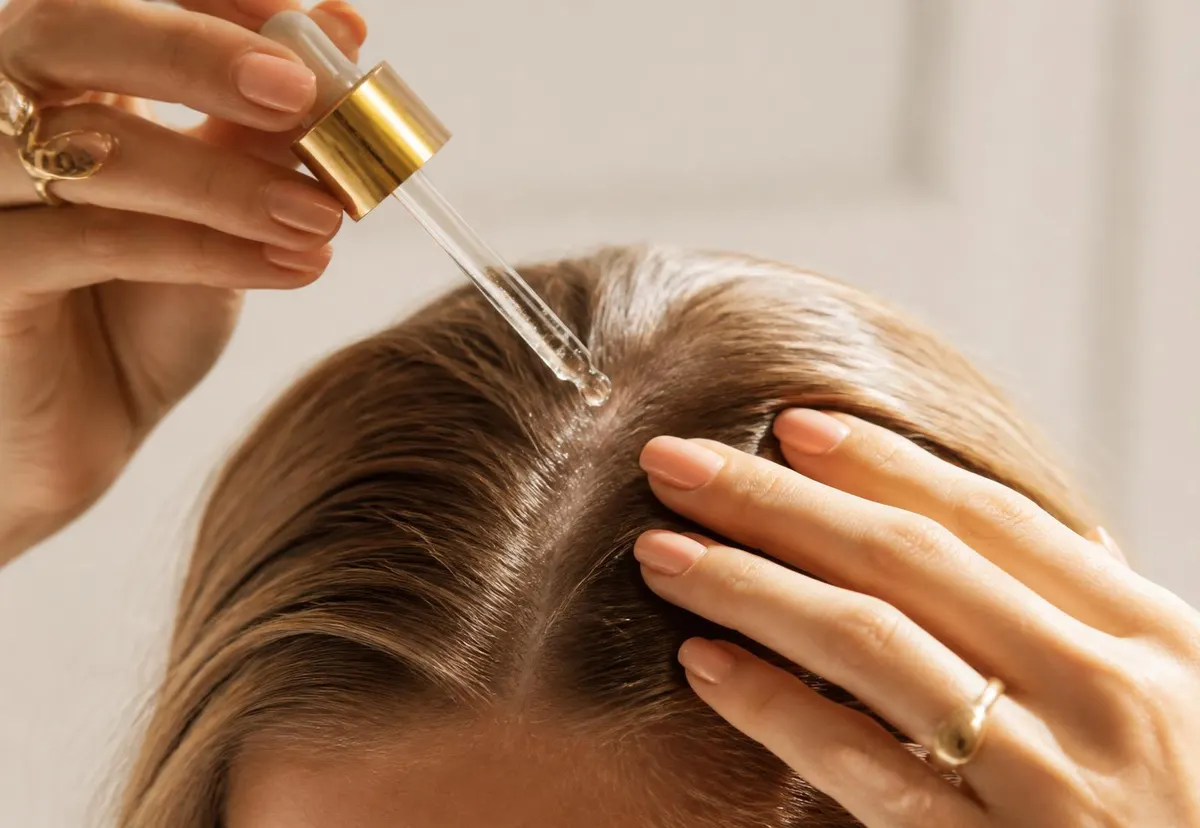
Oily roots aren't a sign that you're doing something wrong. They only mean your scalp produces plenty of sebum. This natural oily film actually protects, but it also makes the roots look stringy, flat and unwashed fast. The instinct to simply wash more often and more vigorously rarely helps. What matters far more is how you cleanse: in the right spot, at the right rhythm, and clarified thoroughly now and then. One thing up front: this is about the look and feel of a healthy scalp, not about treating dandruff, eczema or other skin conditions.
Where the oily roots come from
Sebum forms only at the scalp, never in the lengths. How much of it your scalp makes depends on genetics, hormones, weather and care habits, and it differs from head to head. On short hair the sebum spreads almost by itself down to the ends. On longer hair it stays caught at the roots. That's exactly why everything there looks greasy so quickly, while the lengths are often on the drier side. So the goal isn't to scrub every trace of oil away, but to keep the roots clean and light without overtaxing the scalp.
What this means at MONAT
The MONAT method thinks about washing from the scalp up, and for oily roots that fits especially well. The sebum sits there, and that's where it's decided how fresh your hair looks. So we choose the shampoo by scalp, strand thickness and goal, work it purposefully into the roots and keep the lengths out of it. Two routes work together: a mild zoned wash for everyday and an occasional clarify against build-up. We spell out both in detail below.
Zoned washing: shampoo at the roots, conditioner on the lengths
The single most important move for oily roots is zoned washing. It keeps clearly separate what each zone really needs.
Shampoo belongs on the scalp. Massage it gently into the roots and scalp only, because that's where the sebum sits. The lengths get clean enough by themselves as you rinse; you don't need to lather them separately. A mild shampoo cleanses thoroughly without stripping the scalp.
Conditioner belongs on the lengths. Apply conditioner or a masque from about ear level down and deliberately leave out the roots. That way the thirsty ends get moisture while the roots stay light and free. Rich care at the roots only weighs them down and makes them look greasy sooner.
If the interplay of oily roots and drier ends is on your mind more generally, the guide Oily Roots, Dry Ends: What to Do lays out the underlying strategy.
How often to wash? Let the scalp set the pace
There's no fixed rule like "every other day" that holds for everyone. The right rhythm follows your scalp, not the calendar. Some roots look fresh after a day, others after three. Ease your way to the interval at which your roots still feel comfortable, and observe rather than follow a schedule. For the technique itself, water temperature included, see the guide How to Wash Your Hair Properly.
Your two routes: cleanse normally and clarify occasionally
For oily roots you don't need a complicated regimen, just two routes that work together:
The normal cleansing route is your everyday: a mild shampoo as a zoned wash at the scalp, conditioner on the lengths only, at the rhythm your roots set. That's the base that's perfectly enough for the vast majority of days.
The occasional clarifying route comes in when a film of styling residue, dry shampoo and water deposits has built up anyway. Then you swap the mild shampoo, as an exception, for a clarifying wash. Not as a permanent fix, but as a targeted in-between wash. After that it's back to the normal route.
Myth: "Frequent washing trains the scalp to make more oil"
You hear this line a lot, but it doesn't hold up. Your sebaceous glands don't learn from washing and can't be re-trained by deliberately skipping washes. How much sebum is produced is driven mainly by genetics and hormones. When roots sometimes look oilier after a wash, the reason is usually something else: a product too rich at the roots, incomplete rinsing, or simply your own expectation. So you don't need to let your roots dry out for them to settle. Wash as often as feels right for you.
Clarify regularly with the Purifying Vinegar Shampoo
Even with a good routine, a film of styling products, dry shampoo and water deposits settles on the roots and scalp over time. That's exactly what an occasional clarify is for. MONAT's Purifying Vinegar Shampoo and its matching vinegar rinse free the scalp and roots more thoroughly of such residue, so the hair feels lighter again and the roots feel cleaner.
Clarifying isn't a daily ritual but a targeted in-between wash. Your mild shampoo stays the everyday choice. And "nature-based" doesn't automatically mean "gentle", so simply watch how your scalp responds.
Between washes: The Champ dry shampoo
On days when the roots could use a refresh but you don't want to wash yet, a dry shampoo like MONAT's The Champ helps. It's made for dry, second-day hair. Sprayed onto the roots from a little distance, left to sit briefly and brushed out, it absorbs excess oil and makes the roots look fresher and fuller.
A dry shampoo doesn't replace cleansing for good, though. It disguises sebum, it doesn't remove it. Use it sparingly and only in between so nothing builds up, and keep washing properly on a regular basis.
Clarifying scrub, only on a calm scalp
A clarifying scalp scrub can mechanically loosen build-up and leave the roots noticeably fresher. But it belongs only on an intact, non-irritated scalp. With redness, burning, sore or itchy spots, a scrub is off the table. Then the scalp needs rest and, when in doubt, professional advice, not a scrub.
Common mistakes
- Washing ever harder and more often. More washing doesn't tackle the cause. The right rhythm and the right technique do more than sheer frequency.
- Putting conditioner at the roots. Conditioner and masques belong on the lengths. At the roots they only weigh them down and make them look greasy sooner.
- Making clarifying a habit. A clarifying wash is an occasional in-between step, not a daily shampoo.
- Stacking dry shampoo for days. It disguises sebum but doesn't remove it. Without regular washing, a film builds up over time.
How this step fits into a complete routine is in Building a Hair-Care Routine: The 3 Steps That Matter.
Quick questions
Should I wash less often so my roots get less oily?
You don't need to let your roots dry out. How much sebum forms is driven by genetics and hormones, not by your washing rhythm. Wash as often as your roots feel good, and don't let the calendar decide.
Can dry shampoo replace washing for good?
No. The Champ refreshes the roots between washes and makes them look fuller, but it doesn't remove sebum. Use it as a bridge and cleanse the scalp properly on a regular basis.
How often should I use the Purifying Vinegar Shampoo?
As an occasional clarify, not daily. It's a targeted in-between wash against build-up; your mild shampoo stays the base. Watch how your roots and lengths feel afterwards.
Want to know exactly what your hair and scalp need? Take the free hair analysis. You see your profile in a few minutes, and if you like, a real advisor from our team puts together the recommendations that suit you.