How to use dry shampoo: amount, distance and timing
8 min read Care know-how Updated 5 October 2026 By Anna Sophie Schulenburg
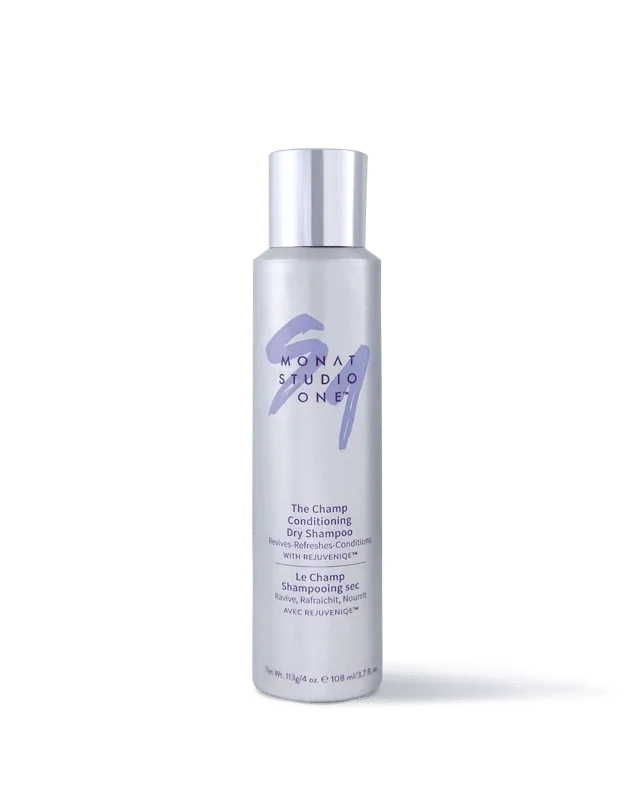
To use dry shampoo properly, spray it only onto dry roots and give it a minute or two before you massage it in and brush it out. Hold the can about 20 cm away and give one short burst into each of several partings, wherever your hair gets oily. If you already know in the evening that tomorrow is not a wash day, apply it before bed and simply brush it out in the morning. With the right amount, your roots feel grippy afterwards and there is no grey sheen on your parting.
Dry shampoo is made for the days between two washes. If your roots are so oily the day after washing that you reach for the can every morning, the thing to adjust is more likely how you cleanse an oily scalp.
How to use dry shampoo: the numbers at a glance
| What | Guide value | How you know it is right |
|---|---|---|
| Hair | completely dry, roots only | the lengths stay as soft and shiny as before |
| Distance | about 20 cm, roughly a hand span | no white patch where you sprayed |
| Amount | one short burst of about a second per parting | the roots feel dry and give off no dust |
| Leave-on time | 1–2 minutes, or all night if applied in the evening | no powder visible after massaging |
| Working in | 30 seconds with your fingertips, then brush | no dust lands on dark clothes |
| How often | two days in a row at most, then wash | your scalp does not itch or feel coated |
How does dry shampoo work, and what does it do to the oil?
At its core, dry shampoo is a fine powder, usually starch from rice, maize or tapioca, often with silica or clay added. These particles soak up the sebum that collects at the roots and makes strands stick together. Once the oil is bound, the strands separate again, the roots lift away from your head and feel drier. In sprays, propellant and usually a little alcohol carry the powder to the hair and then evaporate. The same powder also comes loose, for dabbing on, and as a foam; the principle stays the same.
Nothing is removed in the process. The powder holds on to the sebum and stays in your hair along with it, with skin flakes and styling residue, until your next wash. That is why dry shampoo carries you through a day or two and does not replace washing. Only when you wash your hair properly on the third day do the powder and sebum come out again.
The powder also gives hair grip, because the particles create friction between the strands. For fine hair that falls flat quickly, that grip is often the real reason for buying the can.
When to use dry shampoo: evening or morning
The best time depends on how quickly your roots get oily again.
If they get oily overnight, spray onto dry roots in the evening before bed and massage in briefly. The powder then absorbs the sebum as it forms, and your roots lie less flat in the morning. In the morning you brush out and you are done. If there is powder on your pillowcase after the first night, you used too much.
If they only get oily during the second day, a morning application is enough. Allow five minutes for it, so that the waiting time is not the step you skip.
How to use dry shampoo step by step
Step 1 — Dry roots, shake the can. Your roots need to be dry, and that includes free of sweat. If they are damp, dry them first with the hairdryer on a cool setting. Shake the can for a few seconds so the powder and propellant mix.
Step 2 — Make partings and spray. Start at your usual parting, then use a comb or your fingers to make further partings parallel to it, two to three centimetres apart, as far as your roots get oily; usually that is the top of your head. Hold the can about 20 cm away and give each parting one short burst of about a second straight onto the roots, plus one at the hairline on your forehead and one at each temple. If you use MONAT, the Studio One™ The Champ™ Conditioning Dry Shampoo is the spray for this step; with it too, day three stays a wash day. Turn your face away while spraying, close your eyes and air a small bathroom briefly. The propellant is flammable, so do not spray next to a candle or a hot straightener.
Step 3 — Let it sit. Wait one to two minutes, time enough to brush your teeth or get dressed. During this time the powder absorbs the sebum. If you brush straight away, you spread the powder before it has bound anything.
Step 4 — Massage in. Massage the roots with your fingertips in small circles for about 30 seconds. Stop when you can no longer see powder on your parting.
Step 5 — Brush out and style. Brush away from the roots; the brush picks up the leftover powder. For more lift, blow-dry the roots for a few seconds with cool air against the direction of growth. If your parting still has a grey sheen afterwards, massage it in a second time. Spraying more makes it worse.
Dry shampoo by hair type and hair colour
| Your hair | How to adjust | What to watch for |
|---|---|---|
| fine and straight | two to three bursts on the crown and at the forehead are enough | one burst too many makes the roots feel like straw |
| thick or long | more partings, including the back of the head and the under layer | keep the lengths clear, they turn dull |
| dark | massage in for longer or use a tinted version | a white sheen on the parting |
| blonde or grey | as described, light powder hardly shows | check your forehead for residue in the mirror |
| curly | only at the parting and hairline, worked in with your fingers | do not brush through, or the curls come apart |
| short | two to three bursts, pushed into shape with your fingers | you rarely need a brush here |
| sensitive scalp | one day only, a small amount | if it burns or itches, wash it out the same day |
None of the rows fit because your roots are oily again by the evening after washing? The free hair analysis asks about your scalp, hair texture and washing rhythm.
How often is it OK to use dry shampoo?
Use it two days in a row at most. On the third day, wash. On each of the two days in between, one application is enough; if you spray again at lunchtime, you only lay a second layer on top of the first.
The reason is the powder that stays on your scalp. Every day adds a layer, together with sebum and skin flakes. After three or four days your scalp can feel coated and dusty and start to itch. Fine white crumbs on the parting then look like dandruff and are often product residue.
Here is how to wash out the residue thoroughly after dry shampoo days:
- Shampoo twice. The first round loosens powder and sebum, the second cleanses the scalp.
- Apply the shampoo to your scalp only each time and massage it in with your fingertips; the lather cleans the lengths as you rinse.
- If you use dry shampoo several times a week, plan a clarifying wash every one to two weeks. With MONAT, that job falls to the Purifying Vinegar Shampoo; it does not replace your mild everyday shampoo and does not belong on an irritated scalp.
If your roots still feel waxy or dull after two rounds of shampoo, more has built up over the weeks; then it is worth lifting the product build-up on hair and scalp with a deep cleanse.
If your scalp keeps itching even after two thorough washes and a week without dry shampoo, turns red or develops weeping patches, have a dermatologist look at it. It could be scalp inflammation or an intolerance to an ingredient such as fragrance, and neither can be sorted out with hair care alone.
Common mistakes and how to fix them
| Mistake | Fix |
|---|---|
| sprayed straight onto the parting from five centimetres | 20 cm away, one short burst per parting |
| one long blast on the crown | several short bursts, parting by parting |
| brushed through straight away | wait one to two minutes, then massage |
| sprayed into the lengths and ends | roots only, it makes the lengths dull |
| onto damp or sweaty roots | dry them first on a cool setting |
| grey sheen, so sprayed again | massage again and blow-dry cool, no new burst |
| four days on dry shampoo alone | wash by day three at the latest, with two rounds of shampoo |
If you are still styling on day two, dry shampoo goes on the roots first and hairspray last. Heat protection, blow-dry cream and mousse belong in towel-dried hair on wash day; the order of MONAT styling products sets out how they follow one another.
Quick questions
How do I use dry shampoo foam?
On dry roots: put a walnut-sized amount in your palm, spread it with your fingertips along the parting and hairline, let it dry for two to three minutes and then shape with your fingers. Foam creates no dust and is less likely to leave a white film on dark hair. It does take longer to dry than a spray.
Does dry shampoo make your hair fall out?
No, as long as you use it on occasional days and wash it out regularly. Around 50 to 100 hairs fall out every day anyway and often stay loose in your hair until you next brush it; when you brush out the powder, they all land in the brush at once. If you see bald patches or notice clearly more hair falling out over several weeks, see a dermatologist.
Can I use cornflour instead of dry shampoo?
Yes, pure cornflour or rice starch binds sebum on the same principle. Dab it sparingly onto the roots with a large powder brush, massage it in and brush out thoroughly. On dark hair it shows more easily than the finer powder from a can. Baby powder with talc is dustier, and that dust is best not breathed in.
Can I use dry shampoo before the gym?
Yes, before is better than after. On dry roots the powder absorbs some of the sweat and sebum while you train; sprayed onto roots soaked with sweat, it easily clumps into grey crumbs.
Can I put dry shampoo on freshly washed hair for volume?
Yes, once your hair is completely blow-dried. One or two short bursts on the crown give the roots grip; on towel-dried hair the powder clumps.
The free hair analysis uses your answers to sort out how often your roots need a wash and what suits the days in between.