Silicones & Sulfates in Hair Care: What They Really Do
6 min read Care know-how Updated 2 September 2026
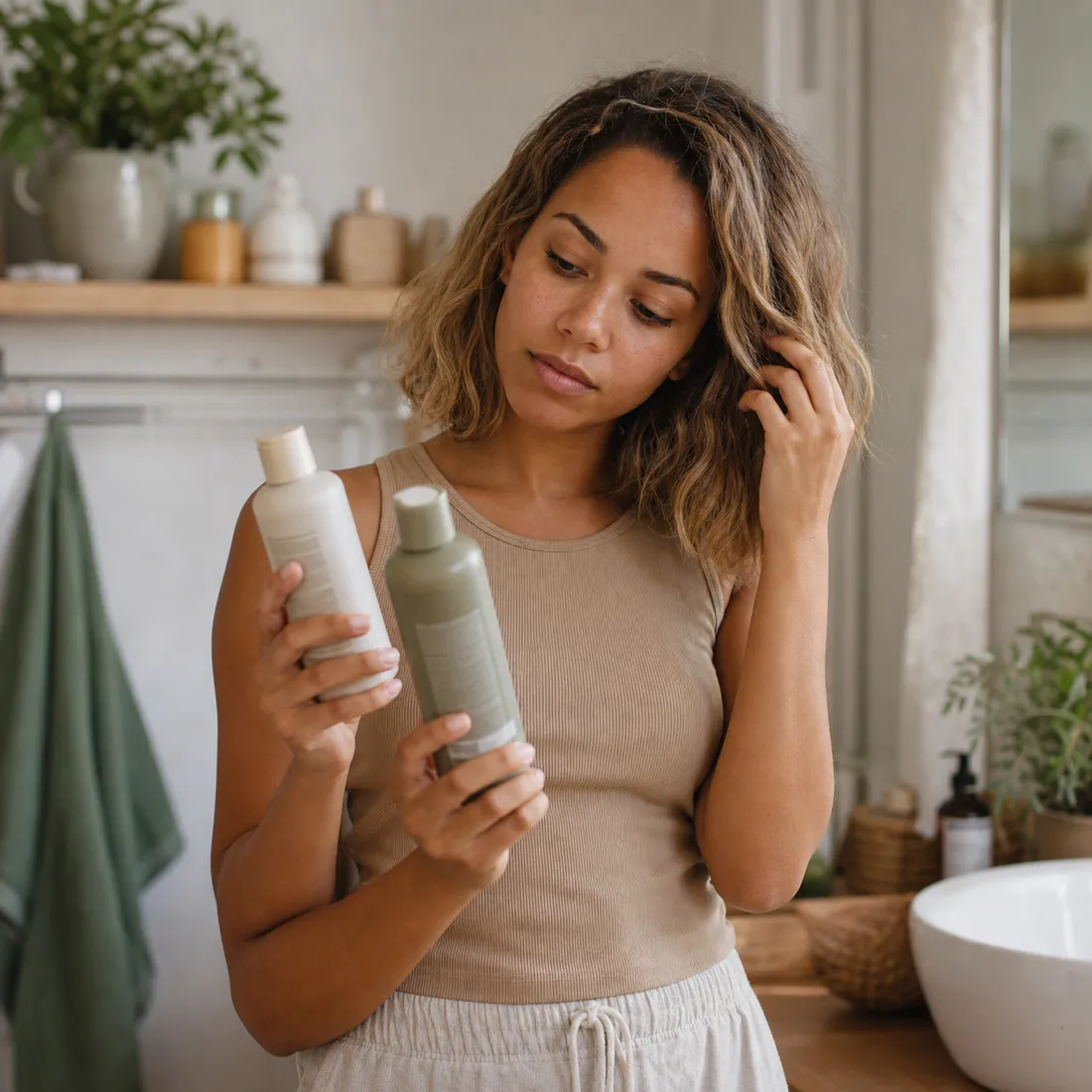
Silicones and sulfates are umbrella terms, not verdicts on quality. Whether a shampoo cleanses gently or a conditioner weighs hair down depends on the whole formulation, the concentration, how you use it and your own hair, not on a single word in the ingredient list.
What sulfates actually do
Sulfates are a group of cleansing surfactants, meaning molecules that bind grease, sebum and styling residue to water so it can rinse away. The best known is SLS (sodium lauryl sulfate): a strong anionic surfactant with plenty of foam and very thorough cleansing. Its close relative SLES (sodium laureth sulfate) shares part of the name, but thanks to its altered molecular structure it is noticeably milder.
How a sulfate behaves in the finished product is decided not by the name but by the recipe: by the concentration, by the companion surfactants it's combined with, and by how often, how long and how hot you wash. A low-dose SLES alongside gentle sugar or amino-acid surfactants cleanses differently from a high-dose SLS without any buffer. Some people with dry or sensitive scalps react to strong surfactants with a feeling of tightness, while others tolerate the same formula without any problem. So "sulfate" on the label tells you which class of ingredient is present, not how mild or forceful the cleansing is.
What silicones actually do
Silicones are film-formers. They lay a wafer-thin film around the fibre, smooth a lifted cuticle, add shine, improve combability and can protect against moisture and friction. Here too, silicone isn't just silicone. Water-soluble types (such as PEG-modified silicones) largely rinse out again with the next wash. Classic dimethicone clings more strongly and stays on the hair longer. Amodimethicone deposits preferentially on stressed areas, and volatile silicones such as cyclopentasiloxane evaporate after application.
On their own, silicone films are chemically inert. They don't "suffocate" the hair, because hair is dead keratin and doesn't breathe. Whether a silicone becomes an issue only shows up in the interplay with cleansing: a strongly clinging silicone plus a very mild wash can build up over time. But silicones aren't the only film-formers, as plant waxes, butters, cationic polymers and proteins can also deposit. Build-up is a formulation and routine matter, not a silicone-specific one.
Why blanket rules fail
"Sulfates dry you out", "silicones weigh hair down", "nature-based is milder", "sulfate-free cleanses more gently": such rules of thumb sound handy but fall short. The reason: a single ingredient says almost nothing about the finished product. What matters is concentration, combination and application. A shampoo with a mild sulfate can be gentler than a sulfate-free product with very harsh alternative surfactants. A light, rinse-out silicone can suit fine hair better than a heavy oil-based mask.
Add to that the individual response: porosity, scalp type, water hardness, wash frequency and personal tolerance shift the result from person to person. That's why a patch or real-world test over two or three washes is more telling than any "free from" rule. Sorting products by buzzwords often rules out ones that would have fit well, and overlooks the fact that "free of X" says nothing about what's in there instead.
How to read an INCI list responsibly
The INCI list is the standardized ingredient list on every pack. Here's how to read it with a sense of proportion:
- Mind the order. Ingredients are listed first in descending order by quantity; very low-dose substances may follow at the end in any order. What sits far back is usually present only in a small amount.
- Place the surfactants. If a strong sulfate is right at the front and without softening companion surfactants, the formula is likely to cleanse forcefully. Gentle surfactants go by names like coco-glucoside or sodium cocoyl isethionate.
- Spot the silicones. Endings in "-cone", "-conol" or "-siloxane" point to silicones; a leading "PEG-" suggests a more water-soluble type.
- No ranking of "goodies" and "baddies". An INCI list shows what's in there, not how it feels. It's a pointer, not a verdict.
When in doubt, the manufacturer's official, current INCI statement applies, because recipes can change. The rest is trying it on your own hair.
How MONAT approaches its formulations
In its hair-care formulas, MONAT does without classic sulfates like SLS and SLES and instead relies on milder surfactant systems, combined with plant oils and caring actives. Different MONAT systems pursue different cleansing and care approaches. The Renew™ Hydrating System is geared towards richer moisture, while the Advanced Hydration System is aimed more at finer hair. The purifying vinegar rinse serves occasional clarifying.
This is not a statement that other formulas are "bad". It's a particular formulation philosophy: mild cleansing plus mostly rinse-out care. Which specific ingredients a product contains is always on the current, official INCI list, which is the binding source. Silicone statements apply formula by formula, meaning per product, not blanket across the whole range. What exactly "nature-based" means and where the limits of the term lie is set out in the guide nature-based hair care.
Who might prefer which formula
There's no choice that's right for everyone, only one that fits your hair and scalp needs:
- Sensitive or dry scalps often do better with milder surfactant systems and lukewarm water. More on this in the guide sensitive scalp.
- Fine hair usually tolerates light, rinse-out care better than heavy films that quickly weigh it down.
- Coarse, very dry or curly hair more often benefits from richer care and stronger smoothing.
- Anyone who styles a lot or has water that needs clarifying should plan an occasional deep cleanse to lift deposits.
Intolerances and personal preferences, around scent, texture or wash feel, are allowed to play into the choice. They don't contradict a factual approach; they're part of it.
Common mistakes
- Sorting by single words. "Contains a silicone" or "contains a sulfate" says nothing about mildness or weight, as what matters is concentration, combination and application.
- Equating "free from" with "better". What's missing doesn't reveal what's in there instead; a sulfate-free product can cleanse more forcefully with harsh alternative surfactants than a mildly dosed sulfate.
- Blaming build-up on silicones alone. Waxes, butters, cationic polymers and proteins can also build up. It's a routine and formulation matter, not a silicone-specific one.
- Judging too soon. A single wash result varies with water hardness and daily form; only two or three washes show how a formula really suits you.
- Lumping all silicones together. Water-soluble and volatile types behave completely differently from strongly clinging dimethicone.
Quick questions
Are all sulfates aggressive?
No. Sulfates range from very strong (SLS) to noticeably milder (SLES), and how forcefully a product cleanses depends on concentration, companion surfactants and application, not on the word "sulfate" alone.
Are silicones bad for hair?
No, they're care tools. Water-soluble and volatile silicones rinse out; more strongly clinging ones can build up over time with very mild cleansing. What matters is the interplay with your routine, not the ingredient on its own.
How do I recognize build-up?
The hair looks stringy, heavy and dull despite care, styles less well, and products seem to "stop working". An occasional deep cleanse clears it up quickly, and build-up can come from many film-formers, not just silicones.
Is nature-based care automatically milder?
Not necessarily. Plant-derived surfactants can also cleanse forcefully, and "nature-based" is no protected measure of mildness. What's decisive remains the overall formula and how your hair responds to it.
Stop guessing at the shelf: the free Glow Tribe hair analysis doesn't decide by blanket "free from" rules but by your hair and scalp needs, and a consultant can also take intolerances and personal preferences into account.