Nature-Based Hair Care: What Vegan, Clean & Co. Really Mean
6 min read Ingredients Updated 23 July 2026
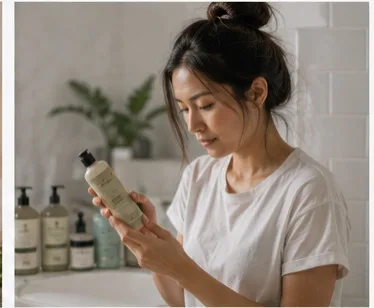
"Nature-based" describes a formulating philosophy, not an automatic verdict on quality or safety. What matters is the actual recipe: the concentrations, the stability, the testing and whether the promised effect is backed up. This guide shows you what "nature-based" seriously means, why nature and formulation science belong together, and how to size up marketing claims yourself in a couple of minutes, without guessing at labels and without ideology.
What "nature-based" means and what it doesn't
"Nature-based" means a formulation deliberately builds on plant-derived and naturally sourced raw materials. The term is not legally protected in Germany, no more than "natural" or "natural cosmetics" are. Any manufacturer may use it, even without independent testing. So "nature-based" is a description of the approach, not a seal of quality.
Above all, it matters what the term does not mean. Nature-based does not automatically mean gentler, more effective or safer. A naturally sourced substance can irritate, and essential oils, for instance, are among the most common contact allergens. Conversely, many well-studied, synthetically produced ingredients are mild and stable. "Chemical-free" or "toxin-free" are misleading slogans too: every raw material, whether from a plant or from a lab, is chemistry, and it's the dose that decides the effect, not the origin.
A high share of plant ingredients or a particularly long list of botanical names says little on its own, either. What counts is whether the ingredients work together in a sensible concentration and in a stable, tested formula.
Nature plus formulation science
A good formulation is more than the sum of its ingredients. Plant oils, extracts and butters supply valuable building blocks, but for them to actually reach your hair, you need carriers, emulsifiers, a suitable preservation system and a stable pH. Without these "invisible" components a purely botanical recipe would turn rancid, separate or grow microbes.
That's why the useful question isn't "natural or synthetic?" but "is this formula well thought out, stable and tested?". At its best, nature-based care combines both: plant active and conditioning ingredients with the craft knowledge of how to combine them so they stay shelf-stable, skin-friendly and effective. It is the complete formulation, not a single hero ingredient on the packaging, that determines what a product actually delivers.
Testing counts just as much: dermatological tolerance tests, stability checks across the shelf life, and an effect that is proven rather than merely claimed. That's unglamorous, but it's the difference between a promise and a product that does what it says.
How to check beauty claims
You don't need to be a chemist to judge marketing claims. Three steps are enough:
- Hold the claim against the INCI list. Ingredients are listed in descending concentration. If the advertised "precious argan oil" sits right at the back of the list, it's decoration rather than an active. A Latin plant name plus "Oil" or "Extract" means a botanical ingredient, and complicated-sounding names aren't bad in themselves.
- Look for specifics. The more precise a manufacturer gets, meaning which effect, based on what, with which caveat, the more reliable they usually are. Vague nature imagery and "free from" claims as the only selling point are a warning sign.
- Read seals correctly. A certified natural-cosmetics seal (NATRUE or COSMOS, for example) proves an independent audit; "nature-based" on its own does not. "Vegan" and "cruelty-free" are separate, distinct claims too, and vegan only says no animal-derived substances are included, nothing about how natural it is.
If you want to dig deeper into which ingredients really matter, the guide on silicones and sulfates helps you read the INCI list.
MONAT and the biotech-beauty idea
MONAT sees itself as a nature-based brand with a biotech-beauty approach: plant-derived actives combined with modern formulation science, in hair care as well as in skincare. A clear framing: MONAT is not certified natural cosmetics and shouldn't be described that way.
The approved self-description is nature-based, vegan and Leaping Bunny-certified cruelty-free, formulated without SLS/SLES, phthalates, parabens and animal-derived ingredients. In hair care, REJUVENIQE® is one example, a blend of more than a dozen plant and essential oils. In skincare, the MONAT Barrier Booster™ range works with plant-based and barrier-strengthening ingredients. In both cases the same yardstick applies as above: what counts is the complete, tested formula, not a single nature promise on the packaging.
Which formulation suits your hair is decided not by the greenest label but by your scalp, hair thickness and goal. The free hair analysis prioritizes exactly that need; ingredient preferences are taken into account, but they don't replace a choice made by your actual hair profile.
Transparency checklist
How do you recognize a serious nature-based brand? By these points:
- It names specific ingredients and their function instead of just nature imagery.
- It draws a clean line between nature-based, vegan, cruelty-free and certified natural cosmetics.
- It backs up efficacy claims and flags what isn't proven.
- It doesn't claim a medical effect where a cosmetic conditions.
- It will explain every INCI line if you ask, instead of dazzling you with "free from" slogans.
Quick questions
Is MONAT certified natural cosmetics?
No, not in the certified sense. The products are nature-based in their formulation, vegan and Leaping Bunny-certified cruelty-free, without SLS/SLES, phthalates and parabens, but they carry no NATRUE or COSMOS seal and shouldn't be called natural cosmetics.
What does "naturally sourced" mean?
That an ingredient comes from a natural source, from plants for instance, and may have been gently processed so it stays stable and effective in the product. The term says something about origin, not automatically about purity, tolerability or effect.
Are synthetic ingredients automatically worse?
No. Tolerability and effect hang on the individual substance, its concentration and the overall formula, not on the origin. Some synthetic ingredients are especially mild and stable, while certain natural substances can irritate.
How do I check beauty claims?
Hold the claim against the INCI list (order stands for concentration), look for specific rather than vague statements, and read seals correctly: only an independent certificate proves a genuine audit, and "nature-based" alone does not.
Enough with the label guessing: the free Glow Tribe hair analysis analyses your hair profile in a few minutes, and a personal consultant calmly explains which ingredients your hair really needs and which marketing terms you can safely ignore.