Color-Treated Hair: Protect the Color, Repair the Feel
5 min read Hair concerns Updated 2 September 2026
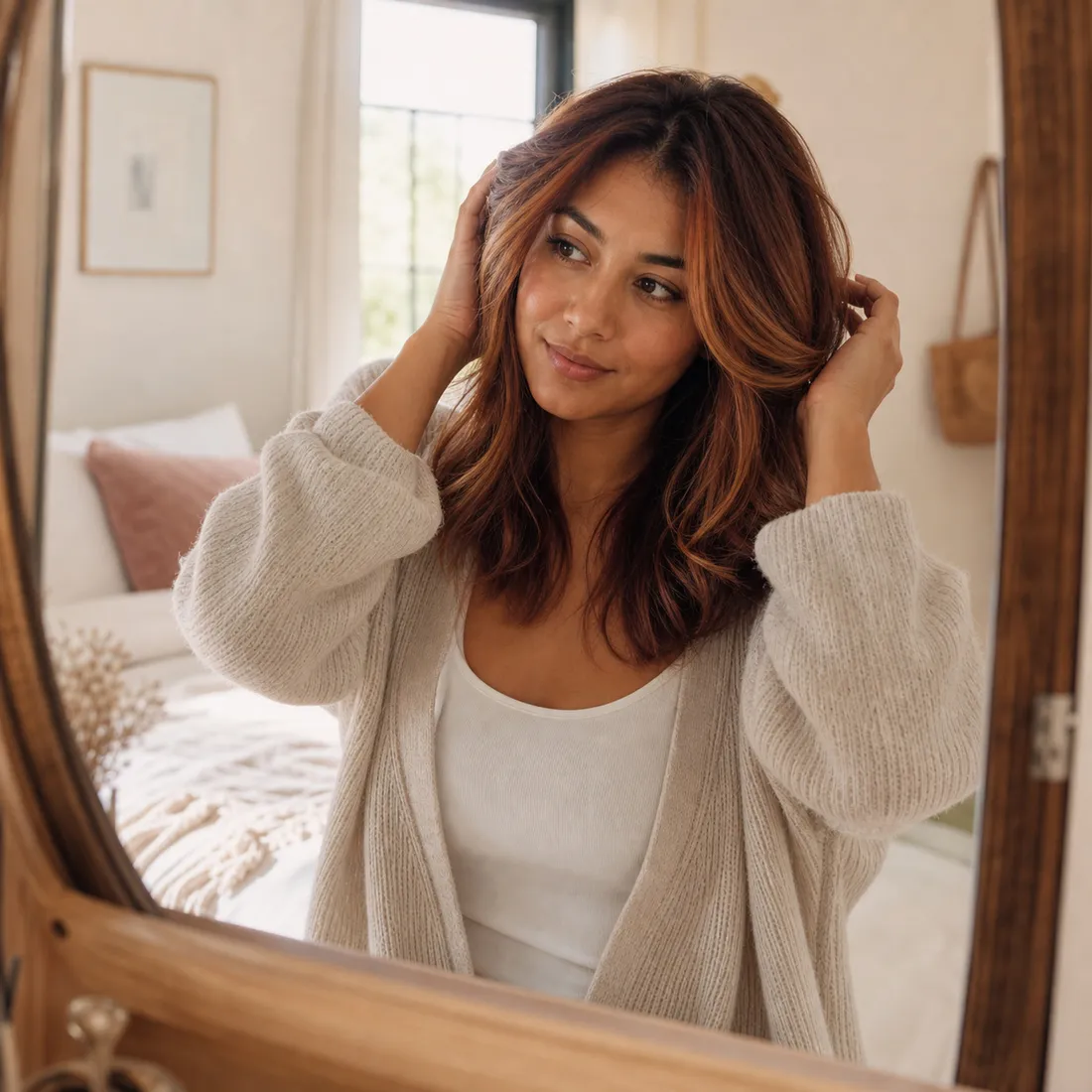
Color-treated hair does not automatically need a completely different routine. What matters is how heavily the fiber is stressed by lightening, frequent color treatments and heat. Care should support color and shine, but above all it should match your hair thickness, your dryness and the actual level of damage. So you choose the base by hair thickness, add targeted damage care where the structure is genuinely weakened, and treat a yellow cast through care and the salon.
What coloring does to hair
Every coloring works its way into the fiber. For color pigments to reach the inside of the hair, the outer cuticle is chemically lifted; with bleaching, the natural pigments are also dissolved out. After that the cuticle lies less smoothly, the hair reflects less light, turns dull faster and loses moisture more easily. During washing, porous spots can soak up water and release pigment along with it, so the color gradually fades.
The difference between color and bleach matters. A simple color refresh in the same tone usually stresses the fiber in a manageable way. Lightening reaches deeper: afterwards the hair is missing parts of the protein scaffold that gives it its spring, the lengths feel stretchy and fragile and more straw-like. How moisture and protein work together is covered in the guide to protein-moisture balance.
Assessing the level of damage
Before you choose products, sort your hair into one of three profiles. They need clearly different care:
- Colored but healthy: dyed in a similar tone or only lightly lightened, barely any breakage. The hair is a little more porous than before but still elastic. Here a mild base routine plus sealing is what counts.
- Repeatedly colored: lengths and ends have been colored over several times and are noticeably more stressed than the roots. Alongside moisture, this hair needs targeted mask sessions.
- Heavily lightened: bleach, balayage or multiple lightenings. The hair feels rubbery and stretchy when wet, breaks more easily and frays. Here structural support takes priority.
A simple pointer: if your hair only looks rough and dull, it is mainly short on moisture. If it also feels stretchy and breaks, the structure is weakened, and then pure moisture care falls short.
What this means at MONAT
For color-treated hair we choose by the same principle as always: scalp and goal first, then the right system. If the fiber is intact, it is about moisture according to hair thickness; if the structure is weakened by lightening, bond care is added. MONAT formulas are free from SLS/SLES, phthalates, parabens and animal-derived ingredients. Whether a single formula is additionally labeled as color-safe is stated on the individual product, because a mild cleanse alone is not yet color protection.
Routine for colored but healthy hair
If the fiber is basically intact, it comes down to two things: keeping the color vibrant as long as possible and keeping the hair supple. You choose the base by hair thickness, not by the motto "richer is better":
- Fine to medium hair: the moisturizing Advanced Hydration System nourishes without weighing it down.
- Thicker, drier hair: the Renew™ System cares more richly.
Add a mask in the lengths and ends once or twice a week, either the Super Moisture Mask or the Replenish™ Mask depending on your needs. To finish, the Restore™ Leave-In Conditioner smooths the surface, brings back shine and lays down a light protective film. A few drops of REJUVENIQE® in the ends only seal porous tips, dosed sparingly so nothing gets weighed down.
Routine for bleached or fragile hair
For repeatedly colored and especially heavily lightened hair, moisture alone is not enough. Here it is also about the weakened hair bonds. For this MONAT offers the Bond IQ™ System: the strengthening shampoo and strengthening conditioner cleanse and care gently while addressing the stressed structure, and the Peptide Therapy Leave-In Cream supports the lengths afterwards.
Here is what a week might look like: Bond IQ™ as your regular wash, plus a rich mask as a treatment once or twice a week, and for very dry blonde lengths a few minutes under a warm towel if you like. A leave-in and a drop of oil in the ends belong to every wash for fragile hair. What bond care can and can't do is explained in the guide to bleached hair. One thing stays important: lightening cannot be chemically undone. Targeted care visibly refills the fiber and brings back grip and shine, but it does not replace a cut for ends that are already broken.
Heat and washing habits
Alongside the products, two everyday habits decide color longevity and condition.
Washing. For color-treated hair two to three washes a week are usually enough; every extra wash pulls pigment out of the fiber. Lather only at the roots and leave the lengths out, as the lather running down cleanses them enough. Lukewarm rather than hot water spares color and structure. How long to wait for your first wash after a fresh color depends on your colorist's instruction or the product note; there is no fixed universal rule here.
Heat. Blow-dryers, flat irons and curling wands open exactly the cuticle that is meant to lock in the color. So heat protection is not optional for color-treated hair; the Studio One™ Thermal Protect Shield lays down a protective film before styling. How to use it properly is shown in the guide to heat protection. Combined with less heat and lower temperatures, the color stays vibrant longer.
Toning: what MONAT currently covers and what it doesn't
As soon as pigment washes out of bleached hair, the warm undertones come through and the blonde looks yellowish or brassy. This calls for a clear note: MONAT currently does not offer a toning or purple shampoo in the German market. So we do not recommend a purple or silver product under the MONAT name that is not available here at all.
What you can do instead: a large part of the "brassy" impression comes from porous, dull lengths that reflect light unevenly. Consistent moisture and structure care smooths the surface and brings shine, so the blonde often looks noticeably clearer and cooler already. For the actual tone correction, the salon is the right place: a colorist can tailor a tint or glossing treatment specifically to your desired tone. MONAT care prepares the hair for this perfectly, but does not replace the color neutralization.
Color through the seasons
What wears color down changes with the calendar. In summer it is sun, salt and chlorine that fade pigment faster, as Summer Hair Care: Protection From Sun, Salt & Chlorine sets out in detail; whether a dedicated UV product is needed for that is placed in Sun protection for hair: do you really need it?. In winter the problem inverts: dry heated air, static and friction under a hat, for which Winter Hair Care: Heated Air, Static & Hat Hair collects the adjustments that fit.
Quick questions
Which MONAT system suits color-treated hair?
With an intact fiber you choose by hair thickness: Advanced Hydration for finer hair, Renew™ for thicker, drier hair. If the structure is weakened by lightening, Bond IQ™ is the more suitable base. The hair analysis asks about that separately.
Does bleached hair need Bond IQ™?
With multiple or heavy lightening, Bond IQ™ makes sense because it addresses the weakened hair bonds alongside moisture. Only lightly lightened, healthy hair often gets by with a moisture base plus a mask.
Does MONAT have a purple shampoo?
Not in the German market at the moment. So you handle a yellow cast through good care for more shine and a tone correction at the salon, not through a purple product that is not available here.
How often should color-treated hair get a mask?
As a guide, once or twice a week in the lengths and ends. Heavily stressed, bleached hair may have the treatment more often; fine hair rather less often and more lightly dosed.
How long should I wait after coloring before washing?
Two to three days is the usual advice, so the color can settle. After that, what matters most is water temperature and how often you wash, not the one extra day.
Does hot water wash color out faster?
Yes, noticeably. Heat makes the outer cuticle swell more, and more pigment leaves with every wash. Washing lukewarm is the cheapest thing you can do against fast fading, ahead of any product.
What care does your color need? The free Glow Tribe hair analysis captures your color condition and hair structure. From it your personal consultant builds you a routine that protects color and hair alike.