Hair Breakage vs. Hair Loss: How to Tell the Difference
5 min read Care know-how Updated 2 September 2026
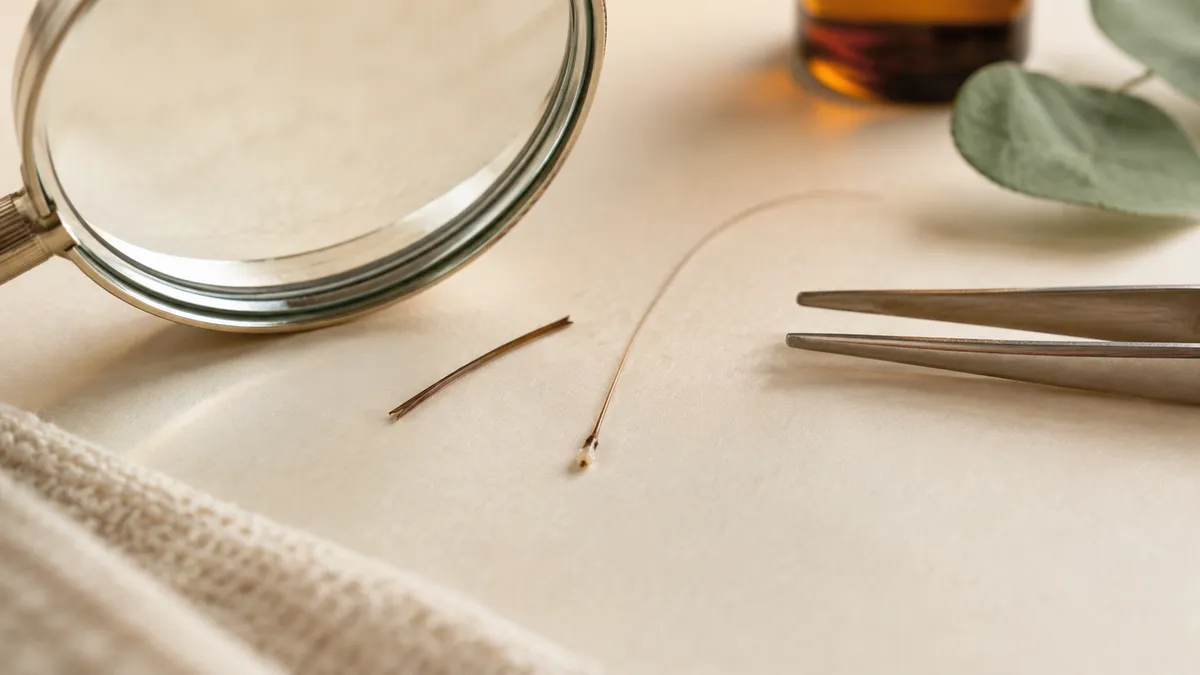
Short broken-off pieces, plenty of full-length hairs in your brush and the shower, a part line that slowly seems to widen: these are different observations, and they point in two very different directions. Breakage is a matter of the hair fibre, which makes it a question of care and protection. Increased shedding or thinning hair, by contrast, involves the root and the scalp, and sometimes has medical causes. This page helps you sort them out. It doesn't replace a professional diagnosis, because what you see on your hair and in your brush are clues, nothing more.
The quick look: is it breaking or shedding?
Your first pointer lies in the length of the hairs you find, and in what you can see at the ends.
| What you look at | More likely breakage | More likely shedding from the root |
|---|---|---|
| Length of the hairs you find | Short stubs of varying length | Whole hairs at their full length |
| The end of the hair | Frayed or kinked | Smooth, often with a pale bulb |
| Where you notice it | Tips, hair ties, heat zones | Spread everywhere, brush and pillow |
| Fullness | Length stops making progress | Thinner ponytail, wider part line |
| Typical triggers | Heat, bleach, tension, tearing when wet | Hormones, nutrients, stress, illness, predisposition |
| Where care applies | To the fibre: strengthen and protect | To the scalp, plus a medical check for warning signs |
A tiny pale bump at the end of a hair (the bulb) does show that the hair was released from the root, but it is not a reliable test and says nothing about the cause. Both patterns can also occur at the same time.
What this means at MONAT
In our consultations we always start from the question of what your real concern is, not from a single product. And this is exactly where the two paths split. If it is breakage, the focus lands on the fibre: strengthen it, protect it, take out friction and heat. If it is fading fullness, the scalp moves to the centre, the environment new hair grows from. MONAT sorts its systems along this principle. That is why it pays to settle the direction first and talk about care second.
Signs of hair breakage
Breakage is usually the result of mechanical or chemical stress on the fibre. Typical clues:
- short hairs sticking up on top of the head or along the parting that look like baby hairs but are actually snapped off
- rough, roughened tips, split ends, and strands that tear easily when combed
- ends that fray, so your length barely moves on despite growth
- brought on by frequent heat styling without protection, bleaching or colouring, tight hairstyles, and tearing at wet hair
Here care aims at rebuilding and protecting the length you already have. The nature-based Bond IQ™ system is designed for stressed, breakage-prone hair. For individual, visibly split ends there is Rejuvabeads, which seals them temporarily without healing the breakage itself, and only a haircut removes split ends for good. Just as important is consistent heat protection, for example with the Studio One™ heat-protection spray. How to tell snapped-off hairs from freshly regrowing ones is covered in detail in the guide to breakage at the crown.
Signs of increased shedding or thinning hair
When whole hairs fall out or overall fullness declines, the cause tends to lie at the root, on the scalp, or in the body. Possible triggers are hormonal shifts, nutrient issues, stress, illness or hereditary patterns. Typical observations:
- clearly more hair than usual in your brush, the shower and on your pillow over a span of weeks
- a ponytail that feels slimmer, or a part line that keeps widening
- generally less density, without finding short broken fragments
In this case it is less about repairing the lengths and more about care that strengthens the hair you have and keeps an eye on the scalp, for example the thickening IR Clinical™ system, which is designed for more fullness and a well-cared-for scalp. What can sit behind fading fullness, and what you can do yourself, is put into context in the overview on thinning hair. One thing stays important: cosmetics improve the look and feel of hair, they don't make a diagnosis and don't treat a medical condition.
Warning signs: when observing is no longer enough
Some patterns don't belong in a guide but with your GP or a dermatologist. Please get it checked if any of these apply:
- the loss sets in suddenly, is heavy, or lasts for weeks
- bald patches, circular gaps, or a visibly receding hairline
- diffuse thinning across the whole head in a short time
- the scalp itches, flakes persistently, hurts, weeps, or is red
- extra symptoms such as fatigue, weight changes, or brittle nails
Signs like these can have a treatable cause that only a professional will find, and the sooner the better. Pure scalp discomfort without any loss can often be calmed, and the guide to a sensitive scalp shows how. If it persists, the same applies here: get it checked by a doctor.
Your next step, depending on what you see
Match yourself roughly to one profile and the next step becomes clear.
- Short broken-off pieces, frayed ends, otherwise healthy scalp. This points to breakage. Reduce heat, always use heat protection, detangle gently and lean on rebuilding, protective care. A tip trim already removes what has broken.
- Whole hairs, more loss than before, a widening part, no warning signs. Bring the scalp and strengthening care into focus, keep an eye on nutrition, sleep and stress, and watch how it develops over a few weeks.
- The scalp itches, flakes or hurts. Calm the scalp first, and if the discomfort persists, get it checked by a doctor.
- One or more of the warning signs above. Don't work through products first, make an appointment promptly. Care can carry on in parallel, but it doesn't replace getting things checked.
If the two overlap, broken lengths and the sense of less fullness, you can tackle both directions and still take the warning signs seriously.
Quick questions
How do I recognise hair breakage?
By short pieces of varying length with frayed or kinked ends. The hairs are not their full length but have torn somewhere in the middle. Often at the tips, where hair ties sit, and wherever heat and tension act.
Is a white thickening at the end of a hair a reliable test?
No. A pale bump only shows that a hair was released from the root, which also happens during perfectly normal hair turnover. It says nothing about the cause and doesn't replace a professional assessment.
How much hair loss is normal?
A certain daily loss is part of it and swings a lot from day to day and person to person. Counting exactly is therefore not a reliable self-test. More telling is the change over weeks, and whether bald patches or a widening part join in.
When should I not just try products?
As soon as a warning sign appears: sudden or heavy loss, bald or circular patches, rapid diffuse thinning, or an irritated, painful scalp. Then the next step is a doctor's appointment, not the next product.
Can breakage and hair loss happen at the same time?
Yes, and often: someone who styles and colours more because their hair is thinning creates breakage on top. Check the two separately: hairs with a root count as shedding, short pieces without a root as breakage.
Does broken hair grow back?
Breakage does not affect the root, so the hair keeps growing. The broken part itself does not repair: the length only catches up once the breaking stops, and what is already broken goes either by growing out or by a cut.
In the free hair analysis, choose separately whether you notice short broken hairs, increased shedding, a wider part or scalp discomfort. The result then prioritises protection, care or getting things checked, in a few minutes and with no obligation.