Air-Dry vs. Blow-Dry: Which Is Better for Your Hair?
5 min read Care know-how Updated 2 September 2026
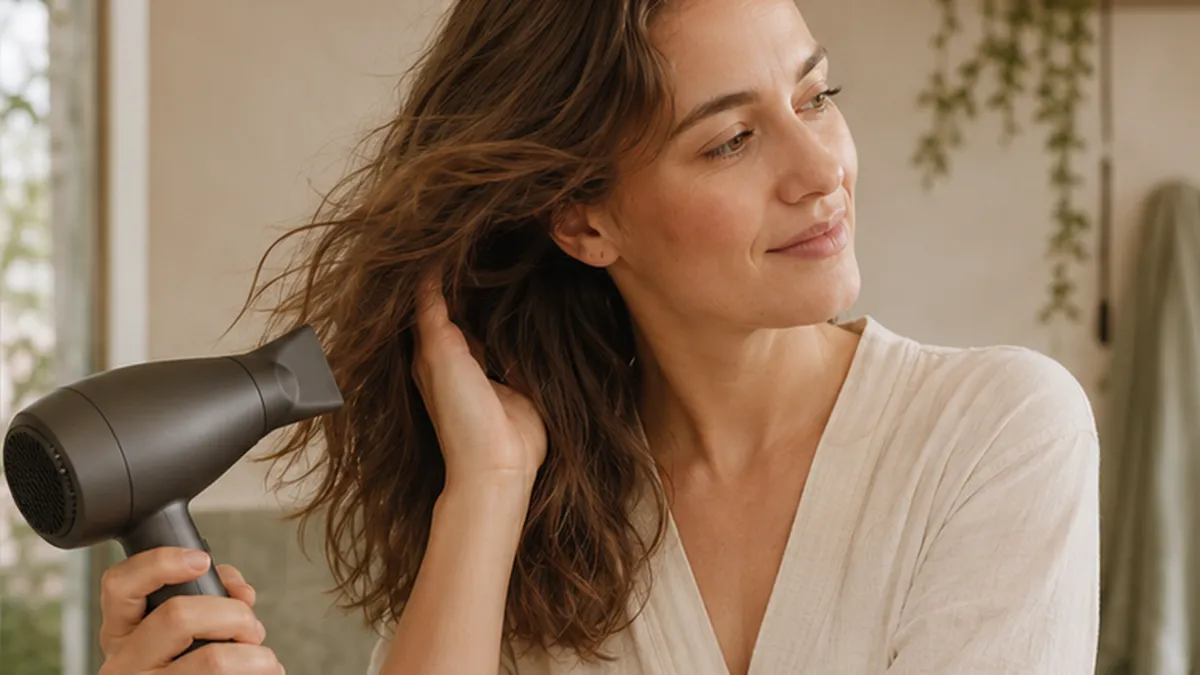
Air-drying avoids heat, but with very dense hair it can take a long time and does not always deliver the result you want. Blow-drying can be fast and controlled, yet it stresses the hair through warmth, airflow and brush tension. The best choice depends on the method and on your hair profile; there is no across-the-board winner.
Instead of asking "which is healthier?", it pays to ask: what does my hair look like, how does it feel, how much time do I have, and what result do I want to see in the end? That is exactly what decides whether air, a dryer or a mix of the two fits your everyday routine best.
Air-drying: strengths and limits
The biggest advantage is obvious: without a dryer, no extra warmth reaches the hair. That is pleasant for hair that already feels stressed, and it preserves the natural texture. Waves and curls often turn out softer and more defined when air-dried, because no hot airflow roughs them up.
The limits show up mainly with time. Dense or very long hair stays damp for a long time, and during that phase the hair sits heavy, clings to the head and can barely be coaxed into shape. With fine hair, air-drying often lacks volume at the roots, because the strands lie flat as they dry. And anyone who wants a sleek, straightened look will rarely get it from air-drying alone; the result comes out natural rather than styled.
One point that is often overlooked: a scalp that stays damp for hours is not pleasant for everyone. Some find the cool, clammy feeling at the roots bothersome, especially in cold weather or when going to bed with a wet head.
Blow-drying: strengths and limits
Blow-drying is fast, controlled and shaping. You set the volume, direction and smoothness yourself, and the time your hair spends wet and heavy is cut down noticeably. For fine hair that stays flat in the air, the dryer lifts the roots; for dense hair, it simply saves a lot of waiting. Styling also succeeds more precisely when you use a round brush to shape length and fall.
The limits are just as clear. Warmth, airflow and brush tension all strain the hair, and wet hair reacts more sensitively than dry. Applied too hot, too close and without protection, blow-drying can leave hair looking dull and brittle over time. So what matters is not the whether but the how: moderate temperature, enough distance, keep the dryer moving, and always apply a heat protectant like the Studio One™ Thermal Protect Shield beforehand.
Which method suits your hair
Instead of a rigid rule, a look at your hair profile helps:
| Hair profile | Usually the better choice | Why |
|---|---|---|
| Fine hair | A short blow-dry | Lifts the roots and shortens the sensitive wet phase |
| Thick, dense hair | Pre-dry, then blow-dry | Air-drying alone takes hours, with the hair lying heavy the whole time |
| Curls and waves | Air or a diffuser | No hot airflow to rough up the structure, so the bounce stays |
| Heat-stressed or colored hair | Air-drying | A deliberate break from heat, airflow and brush tension |
| Little time or cold weather | Blow-drying | You do not have to head out with a wet head and a clammy scalp |
No profile is locked into one method. Most people fare best when they switch flexibly depending on the day and the goal.
The hybrid dry: the best of both
Hybrid drying combines the strengths of both paths and sidesteps their biggest weaknesses. The idea: use the heat-free window for the bulk of the drying and bring in the dryer only to finish. That way you shorten the long wet phase of air-drying and at the same time spare yourself the most aggressive heat of pure blow-drying.
Step 1 — Squeeze gently. Press the hair in a soft towel, do not rub. Never tug at dripping-wet hair; instead detangle from the ends upward with a wide-tooth comb.
Step 2 — Pre-dry in the air. Let the hair air-dry until it is only slightly damp. This phase handles the heat-free part of the work.
Step 3 — Apply heat protectant. Before the dryer comes into play, spread the heat protectant evenly through the lengths and ends. Every strand that will later meet heat needs this film.
Step 4 — Finish cool to warm. On a moderate setting, a hand's width away and constantly moving, dry from the roots toward the ends. To finish, a brief blast of the cool setting: it locks in the shape without adding more heat.
Nature-based lines like MONAT come in right here, with lightweight products that keep pre-dried hair supple and deliver a polished finish while blow-drying, without weighing it down.
Detailed guides to read next
This guide frames the decision; the technique in detail lives in the matching step-by-step guides:
- Blow-dry properly: temperature, distance, brush handling and the cool setting are explained in the guide to blow-drying hair.
- Cushion the heat: why, when and how much protection you need is shown in the guide to heat protection.
Common mistakes
- Assuming air-drying is automatically gentle. Hours of damp hair is more fragile in its swollen state; what is gentle is not the method itself, but the right technique.
- Going to bed with a wet head. The friction against the pillow and the long wet phase encourage breakage and a clammy scalp feel.
- Brushing out wet curls. That roughs up the structure and encourages frizz; when wet, detangle only with your fingers or a wide-tooth comb.
- Blow-drying without heat protection. As soon as the dryer comes into play, a heat protectant belongs in the hair, even for a quick finish after pre-drying.
- Too hot and too close. The highest setting right against the strand strains it more than necessary; a moderate temperature with distance and movement is enough.
How this step fits into a complete routine is in Building a Hair-Care Routine: The 3 Steps That Matter.
Quick questions
Is air-drying always better?
No. It spares the hair the heat, but with slow-drying or dense hair it keeps it in a damp, sensitive state for a long time, and it often gives fine hair too little volume. Whether air, dryer or hybrid is the gentlest depends on the hair profile and the technique.
What is hybrid drying?
A combination of both: you let the hair pre-dry in the air until it is only slightly damp, then finish it with heat protectant on a moderate setting. That way you shorten the wet phase and avoid the strongest heat exposure.
How do I dry curls with little frizz?
Best in the air or with a diffuser on a low setting, without brushing the curls out. Knead a curl-friendly product into the wet lengths, touch them as little as possible and avoid hot direct blow-drying, which roughs up the structure and encourages frizz.
When can a long-damp scalp be uncomfortable?
When the scalp stays clammy for hours, for instance in cold weather or when you go to bed with a wet head. Many find that unpleasant; briskly pre-drying the roots then feels more comfortable.
Is it bad to go to bed with wet hair?
It is the least favourable option: wet hair stretches most, and friction against the pillow causes breakage and frizz. If it cannot be avoided, blot well first, use a silk or satin pillowcase and gather the hair loosely.
Is it bad to sleep with wet hair?
It is not the best idea. Wet hair is swollen and more fragile, and hours of friction against the pillow encourage breakage and frizz. If you cannot avoid it: pre-dry as far as you can, tie it up loosely and use a smooth pillowcase.
How far should I pre-dry before using the dryer?
Until the hair is only slightly damp, no longer dripping and not yet dry. In that state the dryer needs the least time, and time is exactly what the strain is made of.
Find out what suits your hair type: the free Glow Tribe hair analysis analyzes your hair's condition in two to three minutes, and a personal consultant puts together a drying routine for you, complete with the right heat protectant.