What is bond repair? Simply explained
7 min read Hair concerns Updated 2 September 2026
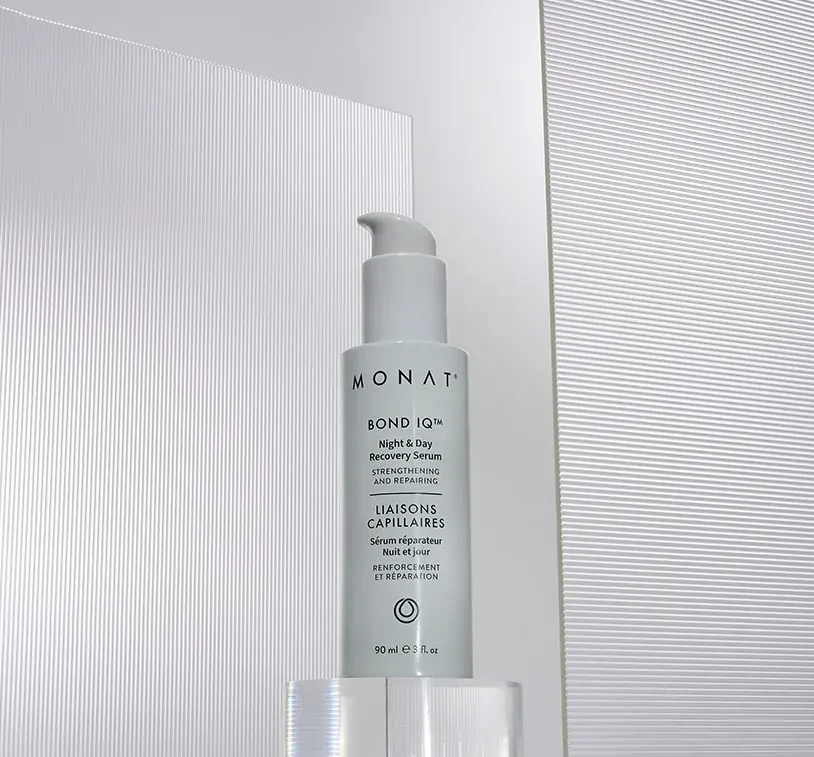
Bond repair is one of those words that sit on almost every care label right now, and it tends to promise more than any cosmetic can keep. So here, without the marketing haze, is what the term really means, where its limits lie and what a leave-in like Bond IQ™ can actually do for stressed hair day to day. The main thing up front: it is about look, feel and protection from new breakage, not a medical repair of the fibre.
Why hair gets weak and brittle in the first place
Beyond the scalp, hair is no longer living tissue but a fine fibre with a protective scale layer on the outside. That layer wears down over time, and that is exactly when hair starts to feel dull, porous and vulnerable. The usual culprits are quickly named: bleaching and colouring attack the structure, frequent heat from the blow-dryer or flat iron dries the fibre out, and mechanical pull from brushing, tying up or towel-rubbing puts it under extra strain.
You can feel the result: the lengths look limp, tangle more easily and snap at weakened points in the middle of the strand. This damage is real and it stays. No care turns it back into pristine, new hair.
What "bond repair" actually means
The term sounds like surgery on the fibre, but it is a cosmetic promise. It refers to products that coat and smooth hair from the outside so that it feels stronger, looks better cared for and breaks less easily during styling. Bond building does nod to the inner links inside the hair fibre, but in everyday cosmetics it is about the visible, tangible impression, not a permanent chemical rebuild of the hair's interior.
That isn't a criticism, just fair framing. A good bond-care product can make hair appear more supple, more defined and more resilient, and so help reduce avoidable new breakage. What it can't do is undo existing structural damage or heal the fibre. That limit applies to every brand, the high-quality ones included.
What Bond IQ™ does day to day at MONAT
Bond IQ™ is MONAT's bond-care example in the German market, a leave-in that stays in damp or dry hair and coats the lengths rather than rinsing away. It is meant as an ongoing habit, not a one-off effect. Used regularly, it strengthens and protects stressed hair along the fibre, so it looks smoother and more robust and detangles more easily, precisely where heat and pull during styling would otherwise have an easy time.
So the realistic benefit sits in feel, combability and prevention: hair that is supple and protected snags and tears less often. It works best over weeks as part of a routine, combined with the basics, gentle detangling, heat in moderation and a heat protectant before blow-drying. A leave-in, though, isn't an overnight fix.
What bond care can't do
Here is the plain statement you rarely read this directly: no bond product in the world structurally repairs already-damaged hair or welds split ends together for good. And derived from nature doesn't automatically mean gentler or stronger; plant-based formulas are still cosmetics with the same physical limits.
On split ends in particular, plain talk helps: once the tip has split, you can smooth its look but not fuse it back together. A tip finish like Rejuvabeads seals it temporarily; according to the manufacturer it reduces the look of split ends by up to 47% for up to 24 hours. But the split end is only gone for good with a haircut. For more on why split ends can be prevented but not repaired, see our guide to split ends and breakage.
Who bond care is worth it for
A leave-in like Bond IQ™ makes the most sense for hair that is visibly stressed, so bleached, coloured, often styled or simply brittle through the lengths. If your hair feels healthy and strong, your usual care is usually plenty. And if the real problem sits at the scalp, or is simply dryness, you are looking at something other than bond care.
If you want to understand the difference between an ongoing routine and a spot finish for the ends, our comparison Bond IQ or Rejuvabeads helps you place it. In our consultations we see bond care as a dependable everyday companion between cuts, not a miracle cure and not a substitute for the scissors.
Where this product sits within the whole MONAT line-up is placed by the overview MONAT Hair Care: Systems, How to Use Them, What Fits You.
Quick questions
Does bond repair fix my damaged hair?
No, not in a medical sense. It makes hair look stronger, feel more supple and helps reduce new breakage during styling. Existing structural damage stays as it is.
What does Bond IQ™ actually do?
As a leave-in it coats and strengthens the lengths along the fibre, so they look more robust and detangle more easily. The benefit shows as a routine over weeks, not as an instant effect.
Does Bond IQ help against split ends?
It can improve the look of the tips for a while and prevent new breakage, but no product closes split ends for good. Only a haircut does that.
Is a natural product automatically gentler?
No. Derived from nature doesn't automatically mean gentler or stronger. What matters is the formula and how you use it, not the label.
Not sure whether a bond routine, simply more moisture or a haircut is what you need? Our free hair analysis asks a few targeted questions and gives you a clear read in minutes, along with a care direction that fits, with no commitment at all.