MONAT Junior: Simple Haircare for Children
6 min read Care know-how Updated 2 September 2026
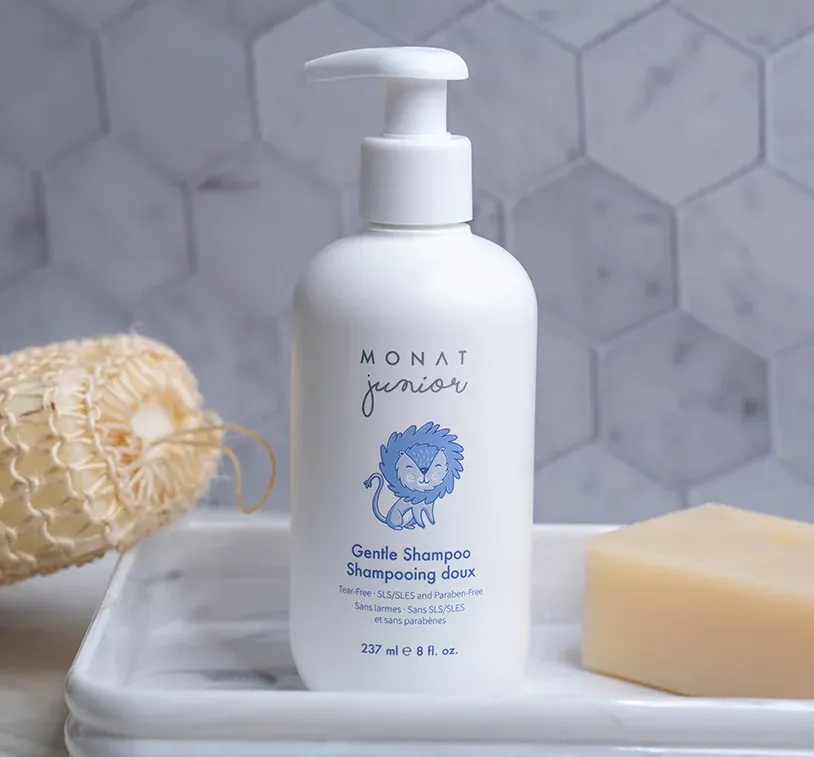
MONAT Junior™ is MONAT's care line aimed at children, designed for the ordinary family wash day with little heads that need gentle products and little fuss. The range includes a MONAT Junior™ Shampoo, a Conditioner and a Detangling Spray. Who they are suitable for, and from what age, always depends on the current labelling on the product in your country.
What sets MONAT Junior™ apart
Children's hair is not simply a smaller version of adult hair. The scalp often reacts more sensitively, the hair is finer, and the most important factor on wash day is usually not the cleansing but combing without tears. That is exactly what the MONAT Junior™ line is built for: a mild shampoo, a light conditioner and a detangling spray that makes wet knots easier to loosen.
The three products are designed to work together, but you don't have to use everything at once. For short, easy hair, the shampoo alone is often enough. The longer and thicker the hair, the more the conditioner and detangling spray help with relaxed combing. When it comes to how to use them, how much to use and the recommended age, follow the label, because the pack beats any general rule of thumb.
Washing gently without stress
The calmest wash day begins dry: brush or comb the hair through gently beforehand, which loosens loose tangles before water tightens them. Then soak the hair thoroughly with lukewarm water. Warm enough to be pleasant, but not hot, since very hot water dries out a child's delicate scalp faster.
Take only a small amount of MONAT Junior™ Shampoo, spread it first in your hands and then work it gently into the scalp with your fingertips, never scratching with your nails. The lather that runs down the lengths as you rinse cleans them well enough, so you don't need to massage extra shampoo into the ends. Rinse for longer than you think: residue leaves the scalp feeling tight and the hair looking dull. The general washing technique is the same for children as for adults, and the guide on how to wash your hair properly explains the steps in detail.
To keep shampoo out of the eyes, a head tilted slightly back, a flannel over the forehead or a bath visor all help. Many children find it more pleasant if you announce what comes next, as it takes the tension out of rinsing.
How often to wash children's hair?
Less than you might think. Children's hair usually gets greasy more slowly than adult hair, and frequent washing tends to dry out the sensitive scalp. For most children, one or two washes a week are enough, except after sport, sand, chlorine or when there is visible dirt involved. In between, clear water and a good comb-through are often enough.
A second round of shampoo on the same wash day is rarely needed for children's hair. It only makes sense if the first pass barely lathers, a sign of a lot of sebum or residue. If the scalp feels clean after one wash, the wash day is done.
Detangling without tears
Detangling is the moment that decides between a good wash day and a tearful one. A few small moves make the difference:
- Condition first, then comb. After rinsing out the shampoo, apply a little MONAT Junior™ Conditioner to the lengths (not the scalp) and let it sit briefly. For extra slip, the MONAT Junior™ Detangling Spray helps on towel-dry hair.
- Wide-tooth comb rather than a fine brush. A comb with widely spaced teeth or a flexible detangling brush glides through knots more easily than a fine brush.
- Ends first. Start at the bottom, at the ends, and work upward in short sections. Starting at the top pushes all the knots together into one big clump.
- Hold the section. Hold the hair above the spot you are combing with your other hand. That way it doesn't pull at the scalp when the comb meets a knot.
- Calm and announced. Tell the child when a tricky spot is coming. For very stubborn knots, loosen them with your fingers first rather than forcing the comb through.
For curly children's hair, one point matters especially: detangle it wet and well supplied with conditioner or spray, then comb through dry as little as possible afterwards, so the curls stay defined.
Sensitive children's scalps
If your child's scalp quickly feels tight, itches or looks reddened, the same principles apply as for adults with a sensitive scalp: wash gently, rinse lukewarm, avoid friction and don't cleanse too often. Pat the hair dry with the towel after washing rather than rubbing it.
One important note: with persistent skin problems, severe itching, bald patches or a rash on a child, that belongs in the hands of a doctor. Cosmetics care for the hair, but they don't treat conditions. A gentle routine is no substitute for a doctor's visit when something isn't right.
Where this product sits within the whole MONAT line-up is placed by the overview MONAT Hair Care: Systems, How to Use Them, What Fits You.
Quick questions
From what age is MONAT Junior™ suitable?
The age guidance is on the packaging and can vary by country. Always follow the instructions on the label and, if in doubt, the advice of your paediatrician.
Can the whole family use the same products?
The MONAT Junior™ line is aimed at children, but it also works as a mild option for sensitive adult scalps. The other way round, children should only use adult products according to the instructions on the relevant label.
How do I best prevent pulling when combing?
Always use conditioner or detangling spray first, take a wide-tooth comb, start at the ends and hold the section above. That takes almost all the pull off the scalp.
Do I have to wash children's hair daily?
No. For most children, one or two washes a week are enough, more often only after sport, chlorine or heavy dirt. Washing too often tends to dry out the scalp.
Not sure which routine suits your family's hair? Take the free hair analysis and get a personal recommendation: Start the hair analysis now.